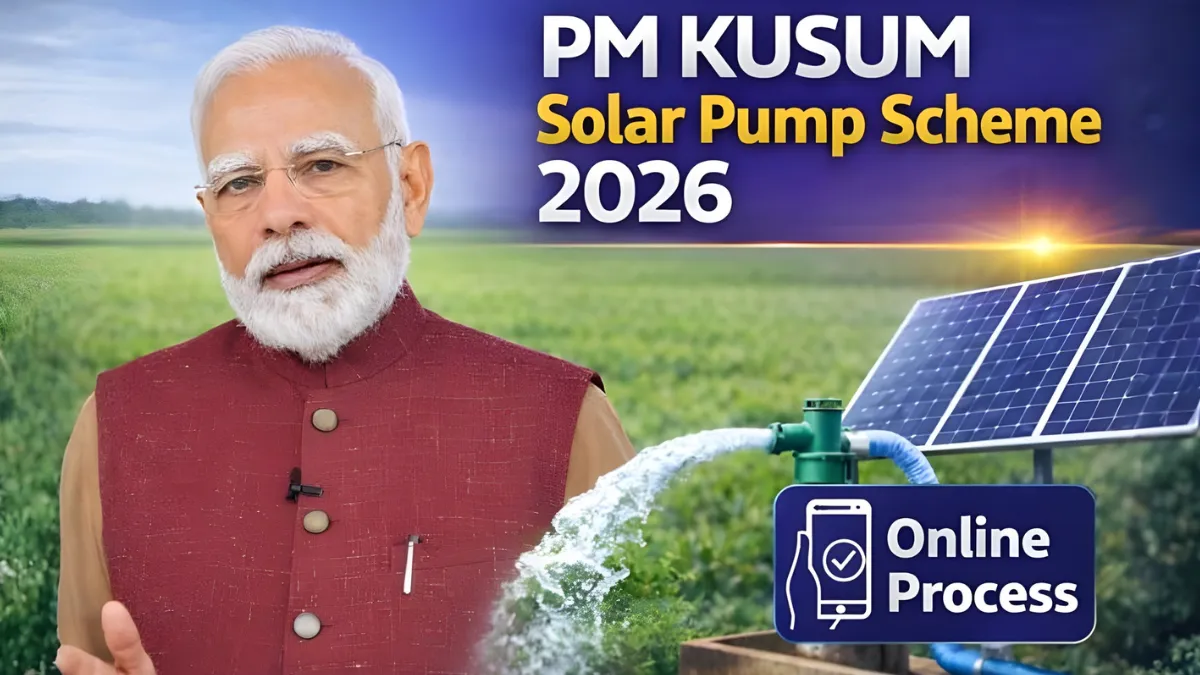
PM KUSUM Solar Pump Scheme 2026: Rising diesel prices and frequent power cuts have been long-standing problems for Indian farmers. The PM KUSUM Solar Pump Scheme 2026 is emerging as a strong solution to both. This government-backed scheme focuses on providing solar-powered irrigation pumps, helping farmers reduce input costs and become energy independent. With the latest updates for 2026, the scheme is gaining renewed attention, especially among small and marginal farmers looking for a sustainable and affordable way to irrigate their fields.
What Is PM KUSUM
PM KUSUM stands for Pradhan Mantri Kisan Urja Suraksha evam Utthaan Mahabhiyan. The scheme was designed to promote the use of solar energy in agriculture. Under this program, farmers can install solar pumps for irrigation and reduce dependence on diesel or grid electricity. In many states, the government is offering heavy subsidies, making solar pumps almost free for eligible farmers. The 2026 update aims to expand coverage and simplify access.
Big Update For 2026
The 2026 update of the PM KUSUM Solar Pump Scheme focuses on wider implementation and faster approvals. Several state governments have announced plans to increase subsidy limits and speed up installations. In some regions, farmers may receive up to 90 percent subsidy, significantly lowering upfront costs. The government is also improving online application systems to ensure transparency and quicker processing, making it easier for farmers to benefit without delays.
Who Can Apply
The scheme is mainly targeted at farmers who own cultivable land. Small and marginal farmers, tenant farmers in some states, and those without access to reliable electricity are given priority. Farmers already using diesel pumps are especially encouraged to switch. Eligibility rules may vary slightly by state, but Aadhaar linkage, land records, and a valid bank account are commonly required. The 2026 version emphasizes inclusion of remote and water-scarce regions.
Solar Pumps Benefits
Solar pumps offer long-term savings and stable performance. Once installed, farmers do not need to worry about fuel costs or electricity bills. Solar pumps are environmentally friendly and reduce carbon emissions from agriculture. They also provide reliable daytime irrigation, which is crucial during peak farming seasons. Over time, these pumps improve crop productivity and income stability, making them a smart investment for farmers planning for the future.
Subsidy And Cost
One of the biggest attractions of the PM KUSUM scheme is the subsidy structure. Depending on the state and pump capacity, subsidies can range from 60 percent to 90 percent. In some special cases, farmers only pay a small fraction of the total cost. The central and state governments jointly bear the remaining amount. For 2026, authorities are working to standardize costs and ensure quality equipment from approved vendors.
How To Apply
Applications for the PM KUSUM Solar Pump Scheme are mostly handled online through state renewable energy portals. Farmers need to register, upload documents, and select pump capacity based on their irrigation needs. After verification, approved vendors handle installation. Offline assistance is also available at agriculture offices in many districts. The government is encouraging digital applications in 2026 to reduce paperwork and ensure faster tracking of requests.
State Wise Implementation
Implementation of the scheme varies across states. States like Rajasthan, Maharashtra, Madhya Pradesh, and Uttar Pradesh have seen strong adoption due to high solar potential. Each state announces its own application timelines and subsidy limits. Farmers are advised to regularly check official state portals for updates. The 2026 rollout aims to reduce regional gaps and ensure uniform benefits across different parts of the country.
Challenges And Reality
While the scheme is promising, challenges still exist. Delays in installation, limited vendor availability, and lack of awareness in rural areas can slow adoption. Some farmers also face difficulties with documentation. However, the government is addressing these issues through awareness campaigns and better coordination with local authorities. The 2026 update focuses on minimizing delays and improving on-ground execution for smoother implementation.
Final Word
The PM KUSUM Solar Pump Scheme 2026 is a powerful step toward sustainable and farmer-friendly agriculture. By offering heavily subsidized or near-free solar pumps, the scheme reduces farming costs and promotes clean energy. With improved policies and digital processes, more farmers can now access its benefits. For those struggling with high irrigation expenses, this scheme could be a game-changing opportunity worth serious consideration.