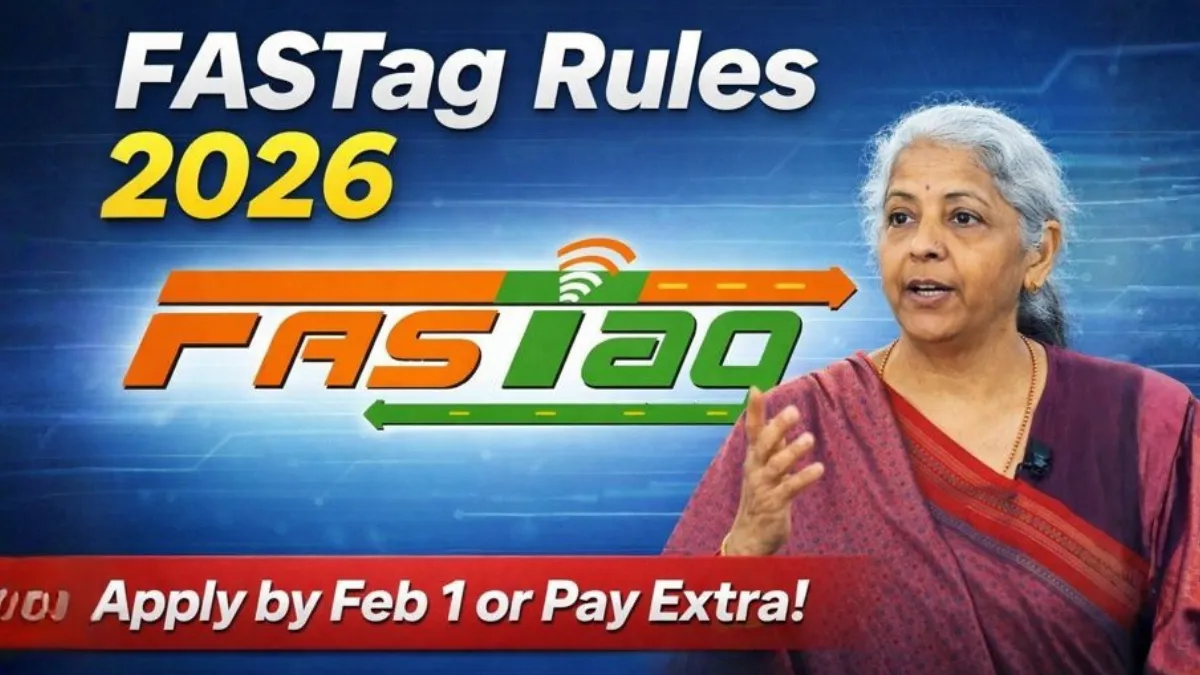
FASTag Rules Changed in 2026: FASTag has become a routine part of highway travel in India, but in 2026, the rules around it are no longer casual. The government has introduced stricter FASTag regulations to close loopholes and ensure smoother toll collection. From 1 February 2026, vehicles without a valid and properly linked FASTag may face extra toll charges and delays at toll plazas. For regular drivers, this update is not optional knowledge anymore it directly affects travel cost, time, and convenience.
New FASTag Rules Mean Serious Action
The updated FASTag rules are designed to end misuse once and for all. Inactive, blacklisted, or wrongly linked FASTags will now be flagged instantly by automated toll systems. Earlier, some vehicles could pass with manual intervention or temporary penalties. That flexibility is now gone. Toll plazas will rely strictly on digital verification, making it essential for every vehicle owner to ensure their FASTag status is active and accurate before hitting the highway.
One Date Can Change Everything
The key date drivers must remember is 1 February 2026. From this day onward, toll plazas will enforce the new FASTag rules without leniency. Vehicles failing to comply may be charged extra or face longer wait times. Authorities have clearly indicated that last-minute excuses will not work. Updating or applying for FASTag before this deadline is the safest way to avoid unnecessary trouble during highway travel.
Not Just New Cars At Risk
Many people assume these rules apply only to new vehicle owners, but that is not true. Even existing FASTag users need to verify their details. FASTags linked to old registration numbers, inactive bank accounts, or expired KYC will fall under non-compliance. Owners of second-hand vehicles are especially vulnerable if FASTag ownership was not transferred properly. Every driver using national highways must recheck their FASTag details.
Extra Toll Will Hurt Your Pocket
The biggest impact of ignoring the new FASTag rules will be financial. Vehicles without a valid FASTag may be charged double the normal toll fee at certain plazas. In some cases, access to FASTag lanes may be restricted, forcing drivers into slower manual lanes. These extra charges are not temporary fines but recurring penalties that can add up quickly for frequent travelers.
Applying FASTag Is Still Easy
Despite stricter enforcement, applying for FASTag in 2026 remains simple. Drivers can obtain FASTag from authorized banks, official highway centers, or approved digital platforms. Basic documents like vehicle registration, ID proof, and address details are usually sufficient. Once issued, correct installation on the windshield and timely activation are crucial. Regular recharges are equally important to prevent low-balance issues at toll plazas.
Why Government Tightened The System
The reason behind these stricter rules is efficiency. According to highway authorities, misuse of FASTag was causing congestion, delays, and revenue leakage. Shared FASTags, inactive tags, and manual overrides slowed down toll operations. By enforcing real-time digital checks, National Highways Authority of India aims to ensure faster toll crossings, better transparency, and improved funding for road infrastructure across the country.
Daily Commuters Will Feel The Shift
For people who travel daily on highways, the changes will be noticeable. Once fully compliant, drivers can expect smoother and quicker toll crossings with fewer stoppages. However, those ignoring the update may face repeated penalties and longer queues. Taxi drivers, logistics operators, and intercity travelers should treat FASTag compliance as a daily necessity, not a one-time formality.
Mistakes That Can Cost You More
Many FASTag issues arise from small oversights. Not updating KYC, linking the wrong vehicle number, or letting the balance drop too low can all lead to penalties. Some drivers also forget to remove old FASTags after selling a vehicle, which can create serious problems later. Regularly checking FASTag status through your issuing bank or app can prevent these costly mistakes.
Final Word: FASTag Rules Changed in 2026
The 2026 FASTag rule change is a clear signal that digital tolling is entering a stricter phase. With the 1 February deadline in place, ignoring this update can lead to extra toll charges, delays, and frustration. On the other hand, staying compliant ensures smooth, cashless, and stress-free highway travel. A few minutes spent checking your FASTag today can save money and time throughout the year.
Disclaimer: This information is based on various online articles and public reports. Readers are advised to verify details personally from official bank websites or government sources before making any decisions. We do not claim 100% accuracy of the information provided here.