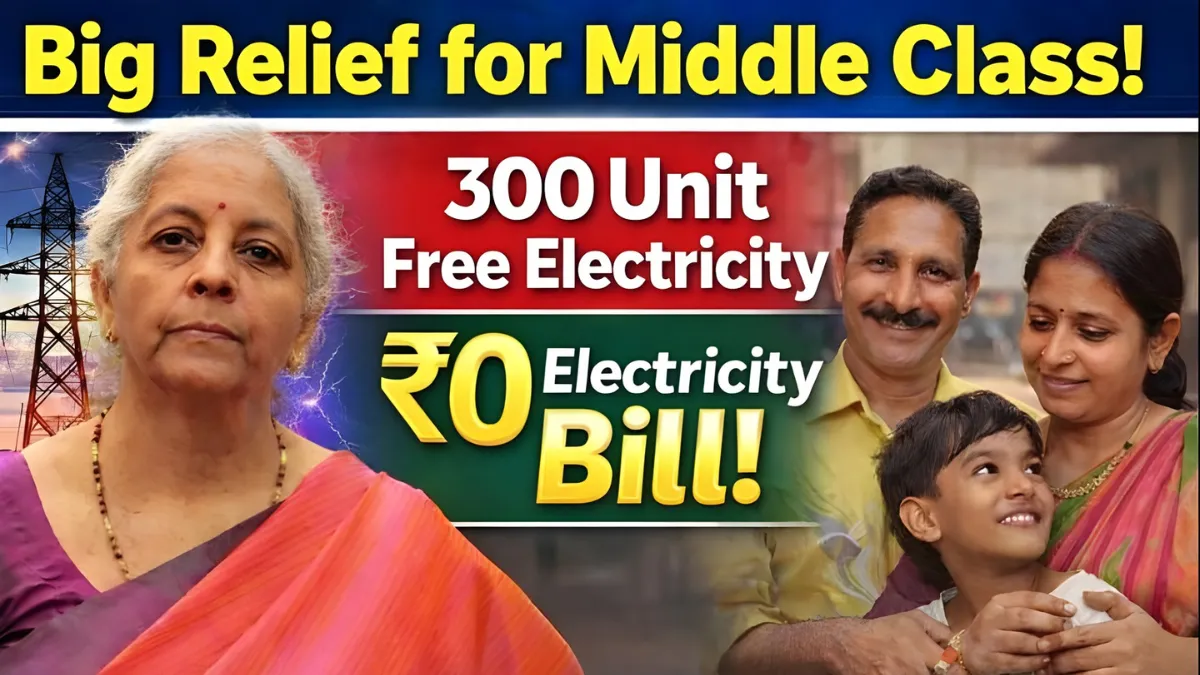
Big Relief for Middle Class: Electricity bills have quietly become one of the biggest monthly stress points for middle-class families. Every month, the meter reading decides how tight the budget will be. That is why the announcement of free electricity up to 300 units has created real excitement on the ground. For many households, this move means one less bill to worry about and genuine financial breathing space in daily life.
A Power Bill Breakthrough
For years, families have adjusted their lifestyles around rising power costs. Fans, coolers, washing machines, and even basic lighting came with constant bill anxiety. The promise of free electricity up to a defined limit changes that mindset. A zero-rupee electricity bill is not just symbolic relief, it is a direct saving that can be felt immediately. This decision connects strongly with everyday household realities.
What Makes This Scheme Special
The biggest strength of this scheme is its simplicity. Use electricity within the allowed limit and the bill becomes zero. There are no complicated calculations for most users and no hidden charges when consumption stays controlled. This makes the benefit easy to understand and easy to trust. Families finally feel that responsible usage is being rewarded instead of punished with higher slabs.
Relief That Reaches Homes
Middle-class households often fall between subsidy schemes and high-income categories. This initiative directly addresses that gap. It supports families who earn regularly but still struggle with inflation. Saving even a few thousand rupees every year on electricity can ease pressure on school fees, groceries, medical expenses, and EMIs. That is why the relief feels personal, not just political.
How Zero Billing Actually Helps
A zero electricity bill creates more than financial savings. It brings peace of mind. Families no longer delay using essential appliances out of fear of high charges. Daily routines become smoother, especially in summer months. When the bill arrives showing no payable amount, it reinforces confidence that household planning and careful usage are truly paying off.
Responsible Usage Gets Rewarded
This scheme quietly promotes energy discipline. Families are now more aware of switching off unused lights, choosing efficient appliances, and monitoring monthly units. Instead of encouraging waste, it motivates smart consumption. People begin to understand how small habits make a big difference. Free electricity up to a limit becomes a shared responsibility between consumers and the system.
Middle Class Feels Valued
One reason this announcement resonates so strongly is emotional. The middle class often feels ignored in welfare planning. This decision sends a clear message that their struggles are being acknowledged. When policies directly reduce fixed monthly expenses, trust grows. People feel seen, heard, and supported in practical ways that affect everyday living.
A Boost To Household Planning
With electricity costs reduced or removed, families can plan finances more confidently. Monthly budgets become predictable. Emergency expenses feel less frightening. Over time, these savings can even encourage small investments or better lifestyle choices. Stability at the household level slowly strengthens overall financial health.
Why This Move Matters Now
At a time when prices of essentials continue to rise, direct cost relief matters more than ever. Electricity is not a luxury, it is a necessity. Making basic power access affordable ensures dignity and comfort for families. This step aligns well with current economic pressures and public expectations from governance.
Final Word: 300 Unit Free Electricity Free
Free electricity up to 300 units is more than a headline. It is real relief that touches kitchens, bedrooms, and living rooms every single day. For the middle class, a ₹0 electricity bill means less stress and more control over life’s priorities. Used wisely, this benefit can become a long-term support system that truly lights up household happiness.
Disclaimer: This information is based on various online articles and public reports. Readers are advised to verify details personally from official bank websites or government sources before making any decisions. We do not claim 100% accuracy of the information provided here.